
Explainer
What a product barcode can reveal, and what it can't
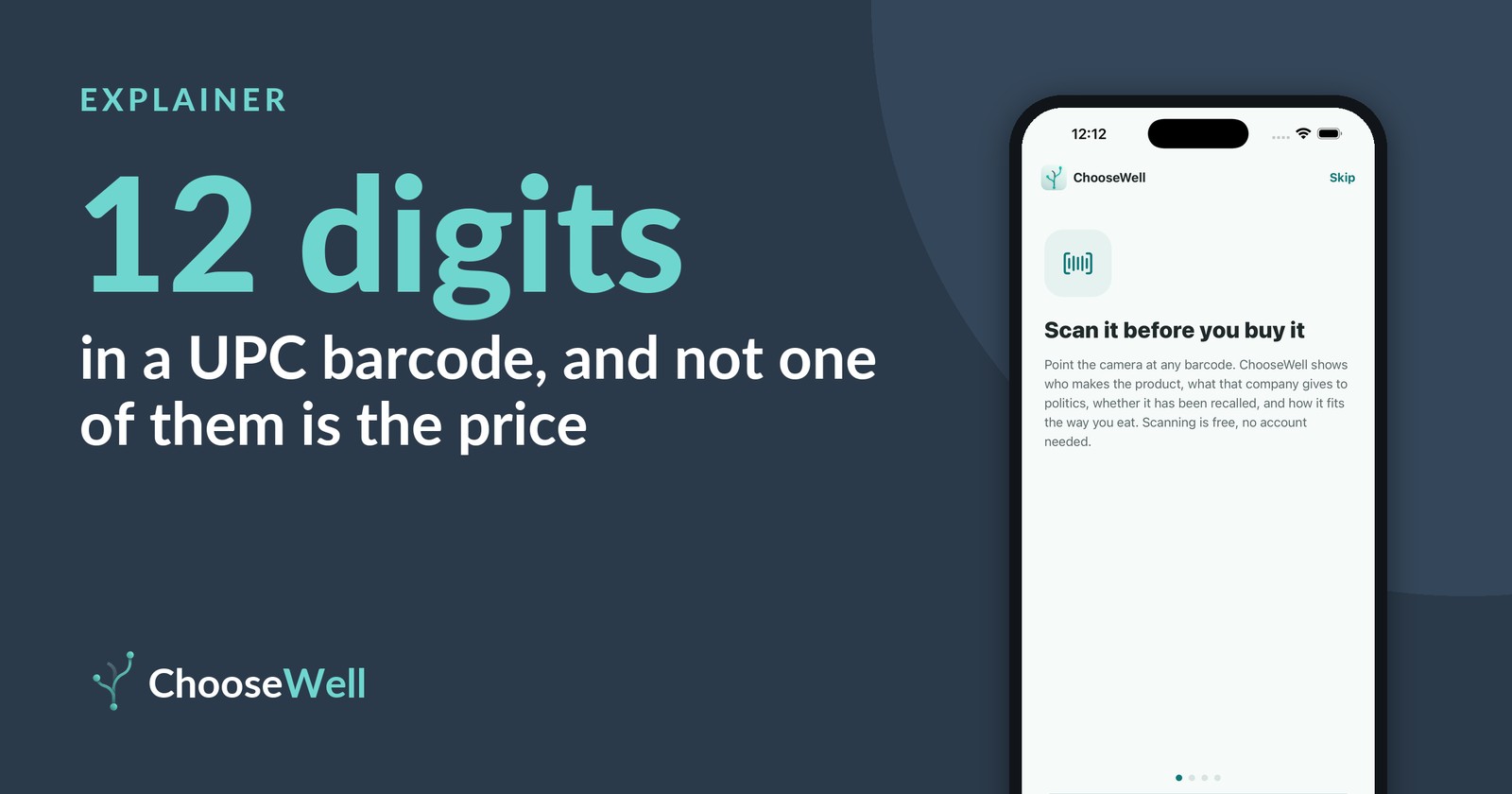
A barcode looks like a row of black lines, but at checkout it works as a key. The 12 digits under a standard UPC don't contain a price, an ingredient list or a company name. They point to records that do. Here's what's in the code, and how ChooseWell turns one scan into a full product page.
What's in the code itself
Most packaged goods sold in the U.S. carry a UPC-A barcode, which encodes a 12-digit number called a GTIN-12. GS1 US, the nonprofit that issues these numbers, describes the GTIN as a key used to retrieve information stored somewhere else. When a cashier scans it, the store's own system supplies the price.
The first digits of the number are the company's GS1 Company Prefix, which identifies the brand owner that licensed it. The rest identifies the specific item. That's all a barcode carries.
What one scan can lead to
ChooseWell uses the code to find the product in public and commercial product databases, then works out who makes it. It goes by the brand owner on record first, then the brand name, and only as a last resort the company prefix in the barcode, and the app tells you when it had to fall back on that. From there, one product page shows:
- The maker and its parent company, when the brand belongs to a larger corporate family.
- Safety: open recalls from the FDA, USDA, CPSC or NHTSA, and ingredients on published watch-lists.
- Nutrition: the product's own Nutrition Facts, against targets you set.
- Reviews from other ChooseWell users.
- Political: how much the maker spends to influence policy, from public filings.
Why two "competing" products can share a maker
Many familiar brands belong to a small number of large parent companies. A scan often shows that two products side by side on the shelf, with different names and different packaging, are made by the same corporation. That's why ChooseWell shows the parent company up front: it changes how you might read the choice in front of you.
What a barcode means, and what it doesn't
A barcode identifies a product; it doesn't vouch for it. The company prefix shows who licensed the number, which is usually but not always the company that makes the product: store brands, for example, carry the retailer's prefix even when another company produces them. If a product's record has no brand or maker, ChooseWell says "maker not identified" rather than guess, and you can photograph the package to add it from the label.
How ChooseWell shows this
The maker's name sits at the top of every product page, with the parent company beneath it when there is one. If a barcode won't scan, use Scan item front to read the package instead. Our article on scanning a product before you buy it covers every way in.
Check it yourself
Scan any barcode in ChooseWell to see the maker's open recalls, flagged ingredients and political spending, each with its public source. Free to scan, no account.